Insights
Custom Ultrasound OEM Development: Requirements to Define Before the First Schematic
A practical guide to the technical and product requirements that shape a custom ultrasound platform before hardware development begins.
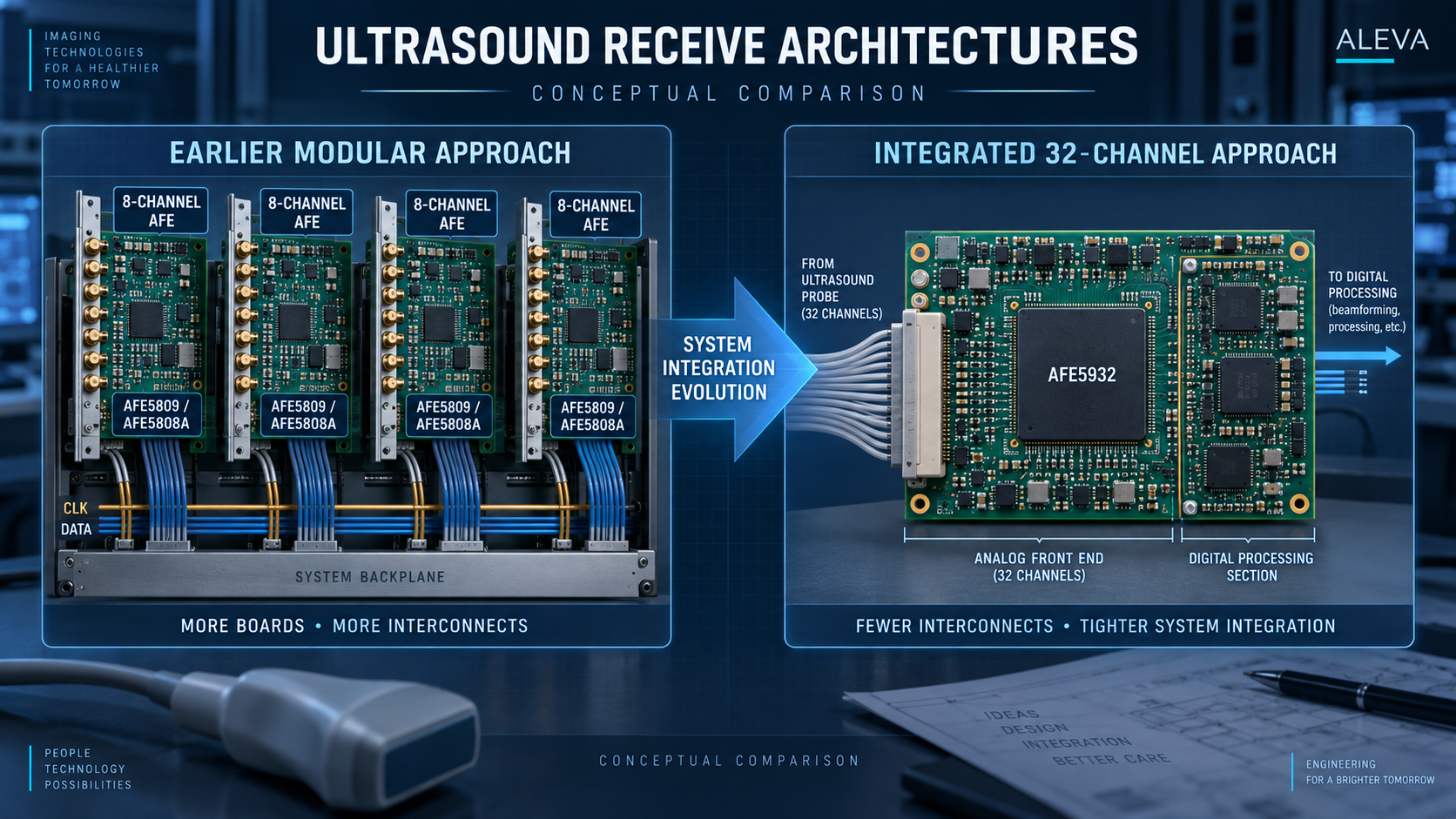
A custom ultrasound device should begin with a product definition—not with a board.
A successful OEM platform connects technical requirements with market positioning, manufacturing constraints, software plans and the expected regulatory pathway. The earlier these decisions are made explicit, the less likely the project is to encounter expensive redesigns later.
A product definition should answer ten questions:
1. Which probes and transducer families must be supported?
2. Which imaging modes are required for the first release?
3. What receive-channel architecture fits the intended applications?
4. What are the latency, frame-rate and display requirements?
5. Is the product handheld, portable, cart-based or stationary?
6. What battery, thermal and mechanical limits must be respected?
7. Which functions belong in the FPGA, GPU, CPU or embedded software?
8. How will calibration, service and field updates be managed?
9. Which components need a second-source or long-term availability plan?
10. What verification evidence and regulatory documentation will be required?
These questions are connected. A probe decision can affect the analog front end. Channel count can affect power, memory and data movement. A decision to add advanced processing can affect cooling, software validation and the product timeline.
Premium, high-end or mid-range—by design
The best architecture is not always the most complex one. Some products need a premium imaging path and broad expansion capability. Others need a focused mid-range system with a smaller footprint and a clear cost target. A capable OEM/ODM partner should design for the intended market rather than force one reference architecture into every project.
From requirements to a manufacturable platform
The development path should include system architecture, feasibility work, component selection, schematic and layout, firmware and software integration, prototype testing, calibration, verification, manufacturing support and documentation. Keeping these activities connected makes the transition from prototype to production more realistic.
A custom ultrasound platform also needs clear interfaces between acoustics, electronics, firmware, image processing, mechanics, test and manufacturing. These interfaces determine whether the final device can be calibrated, serviced, documented and produced consistently.
ALEVA focuses exclusively on ultrasound. We support companies that want to develop a purpose-built system—from probe and transducer integration to beamforming electronics, embedded software and AI-ready imaging workflows.
The goal is not simply to make a prototype that produces an image. The goal is to create a product architecture that can be tested, manufactured, supported and brought to market responsibly.
Technical note: This article is an engineering overview. Final design choices must be validated against the intended use, applicable standards and the target manufacturing process.